







What Your Dog’s Sleeping Position Reveals About How They Feel
Your dog has been sleeping in the same spot, in the same curled-up position, every night for two years. Then last week, they started stretching out flat on their side instead. Nothing happened. You didn’t move furniture, didn’t change routines. So — what changed?
Dog sleeping positions are one of the clearest forms of body language your dog uses. Each position tells you something real about how they feel emotionally, physically, and how much they trust their environment right now.
What Do Dog Sleeping Positions Actually Tell Us?
Dog sleeping positions aren’t random. A dog’s sleeping position can be a form of body language — it can indicate their comfort level, trust, or even a health issue. The key is knowing what each position typically signals, and — just as importantly — noticing when something shifts.
In my experience, the position isn’t always about personality. It changes depending on temperature, stress levels, how tired they are, and how safe they feel in that particular moment. A dog who usually sleeps belly-up might curl tight the night before a vet visit. That’s not random. That’s communication.
Before we dive in — here’s a quick video on why your dog chooses to sleep with you in the first place:
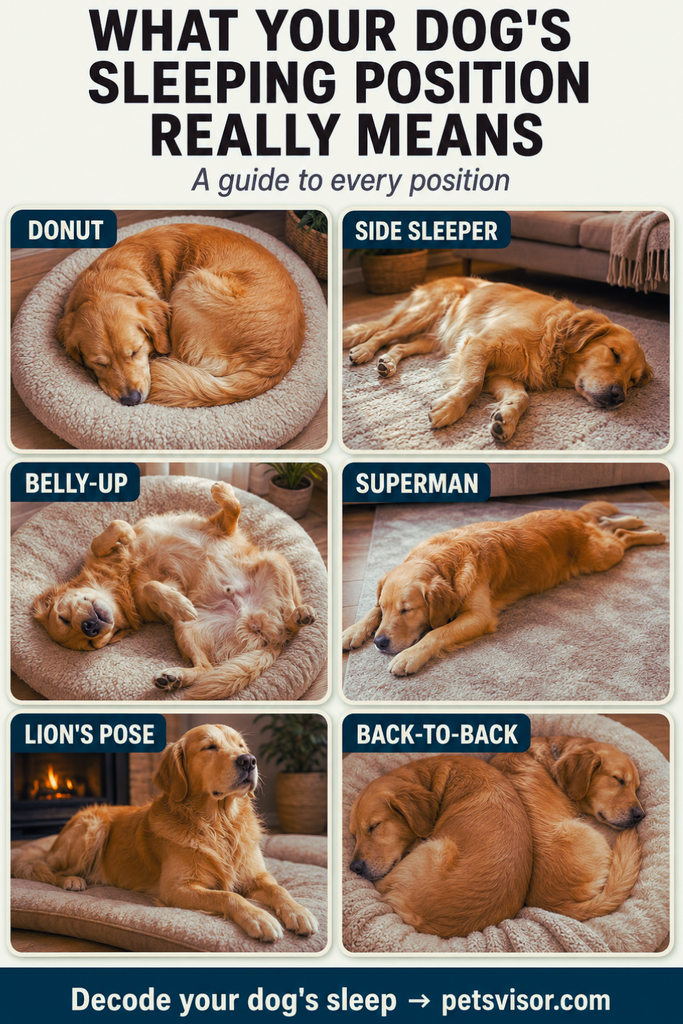
The 6 Most Common Dog Sleeping Positions — Decoded
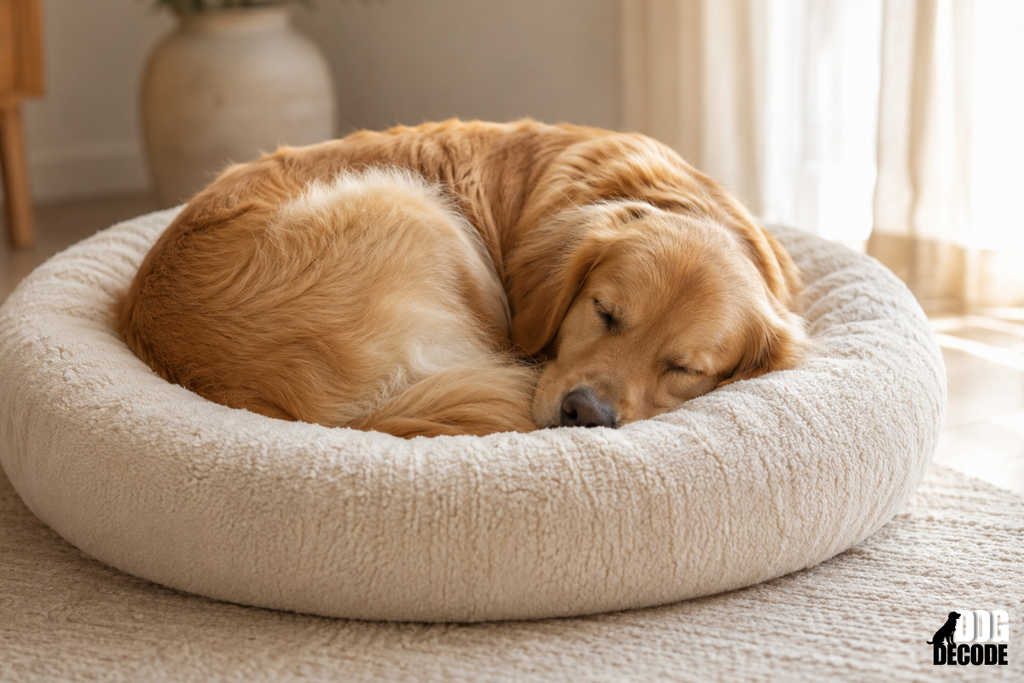
The Donut (Curled Ball)
The donut position is when your dog sleeps curled up in a ball with all of their limbs tucked close to their body — sometimes their nose will touch their hind legs in a shrimp curl, and they may even drape their tail over their body.
What it usually means: Your dog is conserving warmth, or they don’t feel 100% relaxed in their current environment. This position keeps all of their vital organs tucked and hidden — when a dog sleeps this way, they seek to protect themselves while sleeping or are still getting used to their environment. It’s especially common in rescue dogs during their first few weeks in a new home.
Don’t panic if you see this. It doesn’t mean something is wrong. It just means your dog isn’t fully letting their guard down yet — and that’s completely normal.
The Side Sleeper
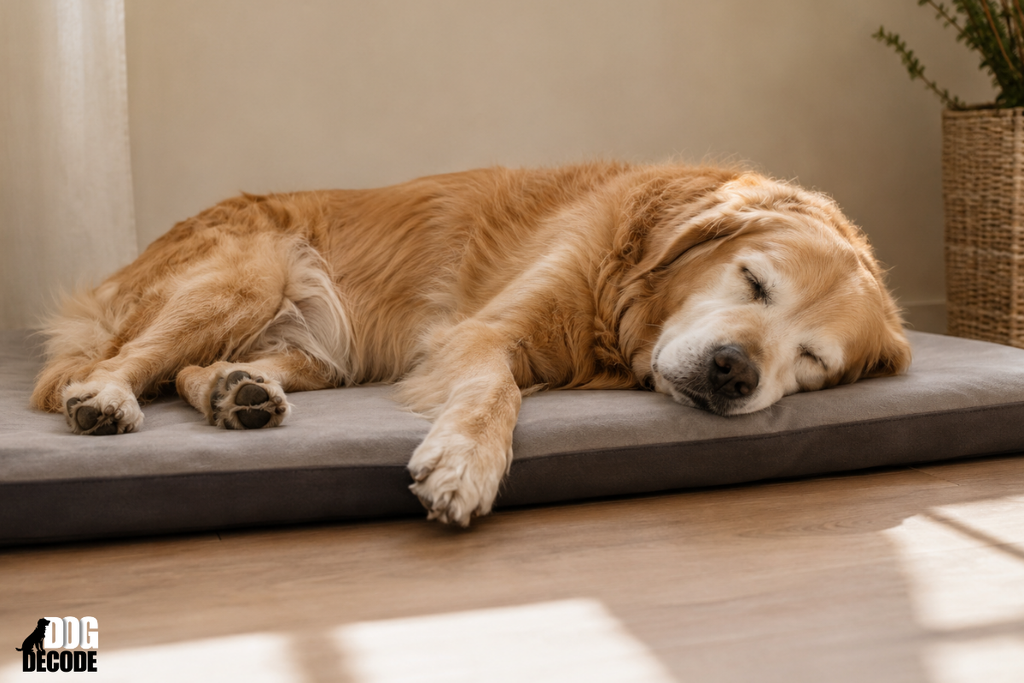
Dogs who sleep on their sides with their limbs extended and bellies partly exposed are typically calm and content — they’re likely sleeping deeply, and you might even see dreamy paw twitches.
What it usually means: This is one of the best signs you can see. Your dog feels genuinely safe. Their muscles are fully relaxed, which means they’re getting real restorative sleep — not just a light doze.
Take BEAR, my friend’s golden retriever. For the first three months after adoption, BEAR only slept in the donut position. The day he stretched out on his side for the first time, sprawled across the living room rug without a care in the world, his owner cried. Not because something was wrong — because something was finally right.
I’ve seen this with so many dogs. The transition from curl to side-sleep is often the quiet moment a rescue dog finally relaxes.
The Belly-Up (Paws in the Air)
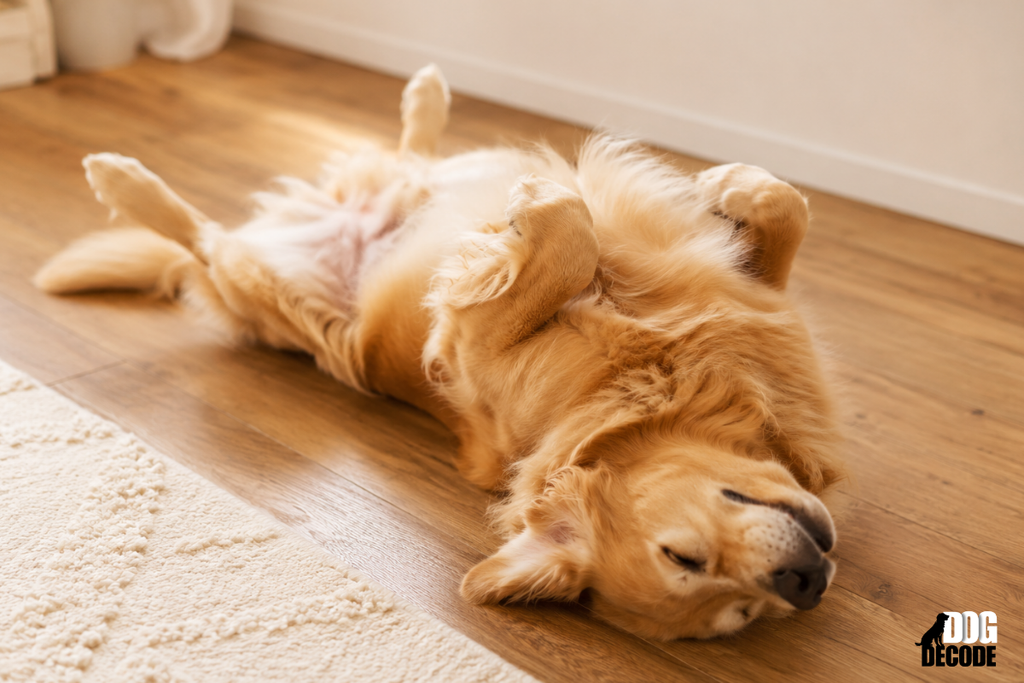
With all four paws in the air, dogs that sleep on their back feel comfortable and safe in their environment — this position also indicates a high level of trust, because your dog is exposing their vital organs while they sleep.
What it usually means: Maximum trust. Full relaxation. In the wild, dogs generally slept curled up for protection, conserving both warmth and safety — sleeping exposed on their backs would have made them more vulnerable to predators. So when your dog does this at home, they’re essentially saying: I feel completely safe here. I don’t need to protect myself from anything.
It can also mean they’re warm and trying to cool down — the fur is thinner on the dog’s stomach and their paws are where sweat glands are located, so when they expose these areas, they can cool down more easily.
The Superman (Sploot)
Front legs forward, back legs stretched behind. It looks ridiculous. It’s also completely adorable.
What it usually means: When a dog is sleeping in a sploot or Superman configuration, they are snoozing on their belly with their hind legs sprawled out behind them — this position suggests the dog is fairly tired but also very relaxed, and makes it easy for them to quickly get back up at a second’s notice.
You’ll see this most in puppies and high-energy breeds. It’s a “I’m resting but I’m ready” kind of position. Not a deep sleep — more of a strategic power nap.
The Lion’s Pose (Sphinx)
Head resting on front paws, back legs tucked to the side or under. Eyes might be partially open.
What it usually means: When your dog sleeps with their head resting on top of their front paws — known as lion’s pose — they’re just taking a minute to doze off. This isn’t deep sleep. It’s a light nap. Your dog can snap back to attention in seconds.
After years of watching dogs do this, I’d say the lion’s pose almost always happens when a dog wants to rest but doesn’t quite feel like fully switching off — maybe there’s activity in the house, maybe they’re waiting for you to come back.
Back-to-Back (Pressed Against You or Another Pet)
Many dogs prefer to sleep back-to-back with other pets or people because it helps them feel safe and protected — this is especially true for dogs who suffer from anxiety, fear, and loneliness.
What it usually means: Bonding. Connection. Your dog is choosing proximity on purpose. Your dog sleeps pressed up on or very close beside you because it makes them feel safe, secure, loved and comforted — reflecting their natural tendencies as domesticated animals evolved to view their owners as family.
What Does It Mean When Your Dog’s Sleeping Position Suddenly Changes?
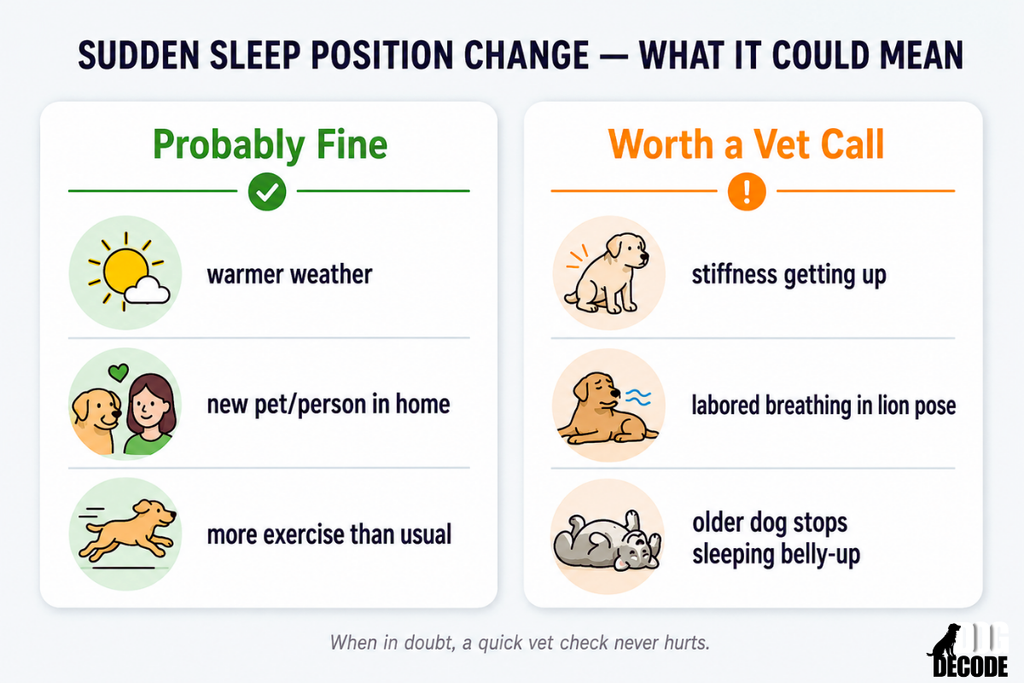
This is the question nobody else is answering — and it might be the most important one.
A one-off change? Probably nothing. Temperature shifted, they had a big day, you moved their bed slightly. Dogs are adaptable.A consistent change that lasts more than a few days? Pay attention.
Probably fine:
- Warmer weather → switching from curl to belly-up (thermoregulation)
- New family member or pet → temporarily more guarded sleeping (adjustment period)
- More exercise than usual → deeper side sleeping (genuine tiredness)
Worth a vet call:
- Suddenly refusing to sleep in their usual position — especially if they seem stiff getting up
- Sleeping only in the lion’s pose with labored breathing (could signal respiratory issues)
- Older dog stops sleeping belly-up entirely — joint pain or arthritis can make exposed positions uncomfortable
Sudden changes in established sleep patterns often signal the need for veterinary evaluation. You know your dog. Trust that instinct.
Which Dog Bed Is Best for Your Dog’s Sleep Style?
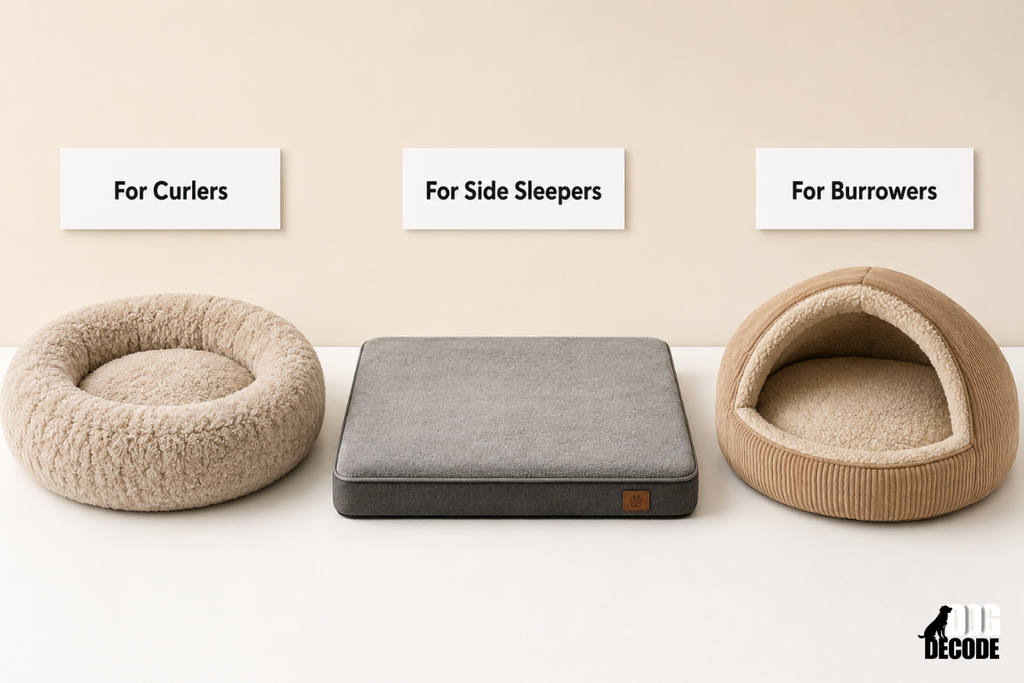
Here’s something most articles skip: the position your dog naturally gravitates toward tells you exactly what kind of bed they need.
Curlers and Donut sleepers do best with a round bolstered bed — the raised edges give them something to lean against and create that enclosed, secure feeling they’re already seeking. A dog who likes to sprawl would prefer a large flat bed, while a curler would love a round one with bolstered sides for security.
Side sleepers and belly-up dogs need space. A flat, wide orthopedic mat lets them fully extend without falling off the edge. Memory foam is especially good here — it supports joints without creating pressure points during those long, stretched-out sleep sessions.
Burrowers — dogs who disappear under blankets — will love a cave-style hooded bed. It satisfies their natural denning instinct without you having to sacrifice your duvet.
Frequently Asked Questions
Wrapping Up
Your dog’s sleeping position is quiet communication — and now you know how to listen. The donut curl isn’t “just how they sleep.” The belly-up stretch isn’t random. Every position is a snapshot of how safe, comfortable, and trusting your dog feels in that moment.
Understanding dog sleeping position meaning gives you a real advantage: you’ll notice when something shifts before it becomes a bigger issue, and you’ll know how to create an environment — and choose the right bed — that helps your dog feel genuinely at ease.
What position does your dog sleep in most? Drop it in the comments — I’d love to hear whether it matches their personality.