

This post contains affiliate links. As an Amazon Associate, I earn from qualifying purchases.
📌 TL;DR
- Dogs lick for 6 main reasons — affection, taste, attention, stress relief, grooming instinct, and submission — and not every lick means the same thing.
- Where your dog licks you matters: face, hands, feet, and legs each carry different signals worth understanding.
- A subtle “kiss to dismiss” lick during greetings or around strangers can actually mean your dog is uncomfortable — not happy.
- Excessive licking that’s new, compulsive, or paired with other symptoms warrants a vet visit — not just a redirect.
Your dog just planted a big, wet lick right across your face. Sweet, right? Maybe. But the real reason your dog licks you is more layered than a simple “I love you” — and knowing the difference between a happy lick and an anxious one could change how you respond.
So, why does my dog lick me? Dogs lick their owners for a mix of instinctive and emotional reasons: affection, taste, attention-seeking, stress relief, and even submission. The tricky part is that the same behavior can mean completely different things depending on where they’re licking, when they start, and what the rest of their body is doing at that exact moment.
Let’s break it all down — starting with the six most common real reasons, then getting into what it means based on which body part your dog seems obsessed with.
Why Does My Dog Lick Me? The 6 Real Reasons Behind the Behavior
Dogs don’t come with labels explaining their licks, so it helps to know what researchers and behaviorists have figured out over years of studying this. None of these reasons exist in isolation — your dog might be doing two or three at once without realizing it.
1. It’s Genuine Affection
Yes, sometimes a lick is just a lick — and it really does mean “I love you.” Mother dogs groom their puppies through licking from the very first hours of life. It’s how they bond, comfort, and communicate care. That early programming doesn’t disappear when your dog grows up. It just gets redirected toward you.
In my experience, the affectionate lick tends to be slow, deliberate, and usually comes when your dog has nothing else they need from you. They’re not hungry. The door isn’t closed. They’re just… happy you’re there.
2. You Taste Interesting to Them
This one surprises people, but it’s real. Human skin carries salt from sweat, traces of food, lotion, sunscreen, and countless other scents your dog finds genuinely fascinating. Dogs have far more sensory receptors on their tongues than we realize, and licking is one of the primary ways they gather information about the world.
After you’ve been exercising? You’re essentially a salt lick. Applied moisturizer? Your dog is curious about that chemical signature. It doesn’t mean they love you less — it just means their nose and tongue are doing what nature built them to do.
3. They Want Your Attention — And They’ve Learned It Works
Here’s the behavioral loop most owners accidentally create: dog licks, owner laughs or pets dog, dog licks again. Every reaction — positive or negative — tells your dog that licking is effective. Even pushing them away or saying “no” counts as attention in your dog’s brain.
This is especially common in dogs who are bored, under-stimulated, or who haven’t had enough exercise that day. The licking isn’t manipulation exactly — it’s a dog doing what has consistently gotten results. Smart, actually.
4. It Releases Endorphins and Calms Their Nerves
Licking triggers an endorphin release in dogs. That’s not a metaphor — it’s a measurable neurological response. So when your dog is anxious, restless, or stressed, licking something — your hand, your leg, a blanket — genuinely makes them feel better in the short term.
After years of watching dogs do this, the pattern becomes easy to spot: licking that happens during thunderstorms, before a vet visit, or when strangers arrive isn’t affection. It’s self-soothing. Your dog is using you as a coping tool. Which is actually a compliment — they trust you enough to seek comfort from you specifically.
5. It’s a Grooming Instinct Left Over from Puppyhood
Puppies lick their mother’s face and muzzle in the wild for a very specific reason: to encourage her to regurgitate partially digested food. Domesticated dogs don’t need that anymore, but the impulse to lick a trusted face doesn’t disappear just because kibble exists. Some dogs, especially those bonded very deeply to one person, will lick their person’s face as a form of social grooming — the same behavior they’d show toward a trusted pack member.
6. It’s a Submission Signal
Licking in the dog world can mean “you’re the boss and I respect that.” Lower-ranking pack members in the wild would lick the muzzles of more dominant animals as an appeasement gesture. Your dog, in a household context, may do this when they’ve done something they sense you’re unhappy about, or simply as a default greeting that says “I come in peace.”
Here’s a video that goes deeper into each of these reasons with real examples:
What Does It Mean When Your Dog Licks Different Parts of Your Body?
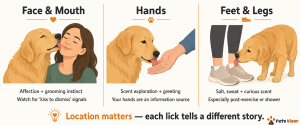
This is the piece most dog owners don’t know — and it matters. Where your dog licks tells you something specific about why they’re doing it. Face licking, hand licking, and feet licking are not all the same message.
Face and Mouth Licking
Face licking is one of the most deeply instinctive behaviors your dog has. It’s rooted in that puppyhood behavior of licking the mother’s muzzle, which makes it both a bonding gesture and an affection signal. But here’s what doesn’t get said enough: if the face licking is happening fast, with a stiff body, dilated pupils, and your dog keeps turning their head away mid-lick — that’s not love. Behavior consultant Jennifer Shryock coined the term “kiss to dismiss” for this exact pattern. The dog is licking to create social distance, not close it. It’s a stress signal hiding inside what looks like affection.
Take Bear, a 4-year-old golden retriever mix I know well — her owner thought her constant face-licking during guests’ visits was excitement. Once we looked at the full picture — tense body, tail low, repeated head turns — it was clear Bear was uncomfortable and using licking as a way to manage that feeling. The guests thought it was cute. Bear was quietly asking everyone to back off.
Hand Licking
Hands carry the most varied scent information of any body part. They’ve touched food, soil, other animals, cleaning products, your steering wheel, your phone. To your dog, your hands are basically a daily diary of everywhere you’ve been and everything you’ve touched. Hand licking is often curiosity and information-gathering as much as it is affection.
It’s also a common greeting behavior — the same impulse that drives dogs to check in on their people through other quiet physical cues. If your dog runs up and licks your hand the moment you walk in the door, they’re saying hello in the most direct way they know how.
Feet and Legs Licking
Feet have a concentrated number of sweat glands, which makes them particularly interesting to a dog’s nose. If your dog goes straight for your feet — especially after a walk or at the end of a sweaty day — taste and scent are almost certainly the main drivers. It’s not the most flattering reason, but it’s probably the most honest one.
Leg licking after a shower, when your dog goes after that clean soap scent, is also common. Something about the unfamiliar scent replacing your usual smell prompts them to investigate. Dogs like your smell. The shower temporarily took it away. They’re putting it back, in their mind.
When Does Dog Licking Become a Problem Worth Addressing?
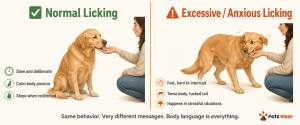
Most licking is completely normal and doesn’t need intervention. But there’s a line. Here’s how to know when you’re crossing it.
Occasional licking is healthy. Constant, compulsive licking — of you, of themselves, of objects — is worth a closer look. Compulsive dog licking behaviors can signal anxiety, gastrointestinal issues, allergies, pain, or in rare cases, a neurological concern. If your dog’s licking is new, sudden, or seems impossible to redirect, a vet visit is the right first step before any behavioral work.
Also worth noting: if your dog is licking areas where you’ve applied medication, steroid cream, or certain skincare products, stop it immediately. Some of those ingredients are genuinely toxic to dogs. The same goes for sunscreen containing zinc oxide. Your dog isn’t being bad — they just don’t know better.
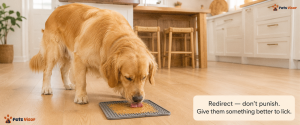
If excessive licking is behavioral rather than medical, the most effective tool is consistent redirection — not punishment. Give them something else to do with their mouth. Products like LickiMat Classic Buddy Dog Lick Mat or West Paw Toppl Treat Toy are excellent for channeling that oral fixation into something constructive, especially during high-stress moments like thunderstorms or when guests arrive.
Wondering how other stress signals show up in your dog’s body language? Understanding why dogs stretch is another surprisingly informative window into how they communicate discomfort or ease.
Should You Let Your Dog Lick You — or Try to Stop It?
Honestly? It depends on the individual dog, the context, and your own preference. A 2017 survey found that 85% of dogs lick their owner’s hand and about half lick their owner’s face regularly. For most healthy adult dogs licking a healthy adult human, the risk is minimal.
The groups where extra caution makes sense: young children with developing immune systems, anyone with open wounds or compromised immunity, and areas of skin where you’ve applied any medication or chemical product. For everyone else, it’s largely a personal call.
If you’d rather your dog not lick you — totally valid — the most effective approach is to simply not react at all, then immediately redirect to a behavior that’s incompatible with licking, like sitting, fetching, or a puzzle toy. Consistent non-reinforcement paired with a clear alternative works far better than telling a dog “no” for doing something that feels natural and rewarding to them.
Is the licking really about love, or is there something more going on? The honest answer is: usually both, depending on the day. Once you start reading the full picture — their body posture, the timing, which body part they’re targeting — the real reason your dog licks you becomes a lot clearer.
Frequently Asked Questions
Why does my dog lick my face so much?
Face licking is rooted in an instinct that goes back to puppyhood, when pups would lick their mother’s muzzle as a social and feeding signal. Your dog licking your face can mean affection, a grooming impulse, curiosity about what you last ate, or — if the body language looks tense — a stress-related “kiss to dismiss” signal. Slow and relaxed licking usually means love. Fast, stiff, head-turning licking often means discomfort.
Why does my dog lick my feet?
Feet have a high concentration of sweat glands, which makes them genuinely interesting to a dog’s nose and taste. Your dog licking your feet is most commonly driven by the salty, scent-rich quality of foot sweat — especially after walking or exercise. It can also be a greeting or affection gesture, particularly in smaller dogs for whom your feet are simply the closest part of you.
When is dog licking a sign of anxiety?
Licking becomes an anxiety signal when it’s repetitive, hard to interrupt, and happens in specific triggering situations like thunderstorms, vet visits, or around unfamiliar people. Watch the body alongside the lick: tucked tail, low ears, panting, and repeated head-turning during licking all point toward stress rather than affection. If this pattern is consistent, speak to your vet or a certified behaviorist.
Is it safe to let your dog lick your face?
For most healthy adults, occasional face licking carries minimal risk. The caution applies to young children, people with weakened immune systems, and anyone with open cuts or skin wounds — dog saliva does contain bacteria that can cause infection in those cases. The CDC recommends keeping dog licking away from open wounds and the faces of very young children as a basic precaution.
How do I stop my dog from licking me so much?
The most effective approach is to withdraw all attention the moment licking starts — no eye contact, no pushing them away, no verbal response — then immediately redirect to an incompatible behavior like “sit” or give them a lick mat. Consistency matters more than intensity here. Punishment doesn’t work well because licking is deeply instinctive; redirection to an acceptable outlet is far more effective over time.
The real reason your dog licks you is almost never just one thing — it’s a combination of instinct, emotion, sensory curiosity, and a communication system they’ve been refining since birth. Understanding why does my dog lick me means learning to read the whole picture: where they lick, when they start, and what their body is doing at the same time.
Most licking is harmless and even sweet. But once you know the difference between an affectionate slow lick and an anxious “kiss to dismiss,” you’ll see your dog’s behavior in a completely new way. If you want to keep building that understanding, your dog’s sleeping position reveals just as much about how they’re really feeling.
Does your dog have a preferred licking spot — face, hands, or feet? Drop it in the comments. I’d love to hear which one yours goes for most.