

This post contains affiliate links. As an Amazon Associate, I earn from qualifying purchases.
📌 TL;DR
- Most stretching is completely normal — muscle warm-up, greeting behavior, or a play invitation
- A stretch that happens when you walk in is a social signal, not a physical one
- The prayer position held for a long time, repeated often, or paired with vomiting is a medical emergency — not a stretch
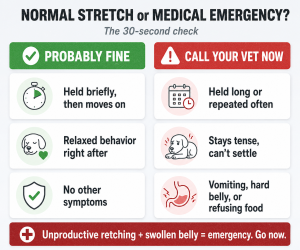
- The 30-second check: normal stretches are brief and followed by relaxed behavior. Pain stretches are held, repeated, and paired with other symptoms
Your dog does that big front-leg stretch the second you walk in the door, before they’ve even come over to say hello. Or they wander up while you’re working and stretch out against your leg for no reason you can see.
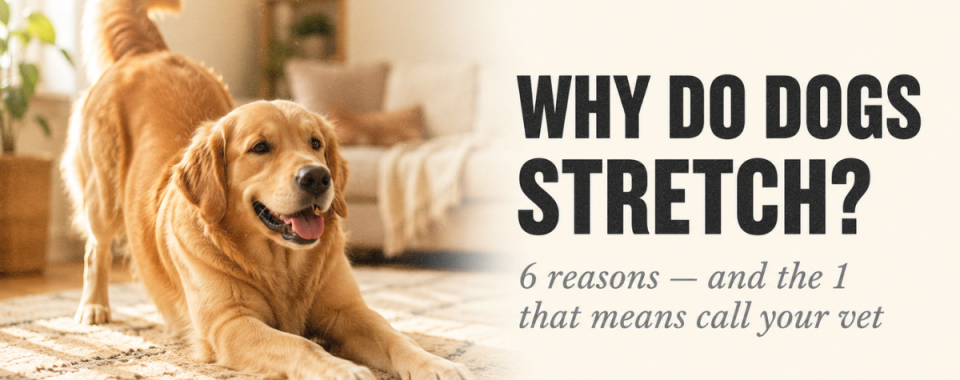
There are six reasons dogs do this. Five of them are good news. One of them means you should call your vet.
The difference comes down to three things you can check in about thirty seconds.
What Does It Mean When a Dog Stretches?
Start with the obvious part. When your dog has been lying still, blood flow slows down and their joints get stiff. A stretch pushes fresh blood through and loosens everything up before they get moving again.Same reason you stretch getting out of bed.But dogs took that movement and turned it into something else too. The exact same position can mean “my legs are stiff,” or “you’re finally home,” or “my stomach hurts and I don’t know how to tell you.”
That’s what trips people up. The shape of the stretch doesn’t tell you much. The context does.
Three Things Worth Watching
- When it happened — right after a nap, or the moment you walked in?
- How long they held it — a couple seconds, or a while?
- What they did next — settled down, or went right back into it?
Keep those three in mind. They come back later.
Why Does My Dog Stretch When He Sees Me?
That one’s a greeting. And it’s usually just for you.
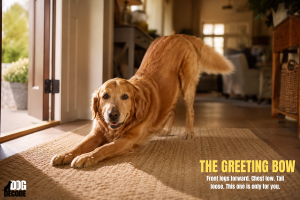
You’ll know it when you see it — front legs stretched forward, chest low, back end up, tail moving loose. Your dog was resting, you showed up, and their body switched back on. The stretch is that transition.There’s more to it than that, though. Research on dogs and their people shows stress hormones climb while you’re gone and drop once you’re back. That full-body loosening you’re watching is often what that drop looks like from the outside.
Here’s the part most people never catch: your dog probably doesn’t do this for everyone. Watch over the next week. They’ll do it for you. Maybe one other person in the house. Not the neighbor. Not the guy dropping off a package.And honestly, most owners walk right through it. They step over the dog, head for the kitchen, figure the dog is just waking up.
What to Do About It
Stop for ten seconds. Let them finish.
That’s the whole thing. You don’t need to turn it into a big petting session — a lot of dogs would rather you didn’t. Just don’t walk through it. A greeting that gets noticed is a greeting your dog keeps offering.
I went deeper on this in a video — including three reasons that only show up when your dog stretches directly against your body:
Is My Dog Stretching or Play Bowing?
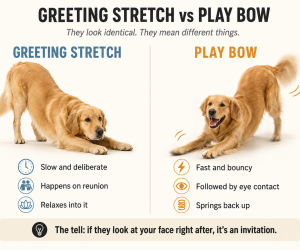
These look almost identical, and they mean completely different things. Speed is the giveaway.A greeting stretch is slow. Your dog holds it, then eases out of it. It shows up after you’ve been gone, after a nap, first thing in the morning.A play bow is quick and springy. They drop, pop back up, maybe bark, maybe drop again. And then they look at you.That look is everything. If your dog stretches and immediately checks your face, they’re not stretching. They’re asking.
Worth knowing: dogs whose invitations get ignored will eventually quit offering them. You don’t have to play right then. Just look back. Say their name. Let them know it landed.Take BEAR, a golden retriever I’ve watched for years. Every time his owner closes her laptop, he play bows in the same spot. She started saying “one minute, buddy” out loud instead of ignoring him. Now he waits instead of pestering. That’s all he wanted.
Why Is My Dog Stretching a Lot All of a Sudden?
Usually one of three things. Only one of them needs a vet.
Their Joints Are Getting Older
Dogs with early arthritis stretch more because it actually helps. It decompresses stiff joints and buys them a little relief. You’ll notice it most in the morning, before they’ve warmed up.
Watch what comes with it. Slower getting up. A pause at the bottom of the stairs. Thinking about it before jumping on the couch. If those are showing up too, it’s worth a vet visit — not urgent, but worth it.
One thing owners tend to overlook: where your dog sleeps affects how stiff they wake up. A hard floor or a thin flat bed means a tighter morning and more stretching. An orthopedic memory foam bed changes that. Bedsure Orthopedic Dog Bed is one of the more commonly recommended ones and comes in every size.
For joint support itself, most vets point toward glucosamine and chondroitin. Nutramax Cosequin Soft Chews for Dogs is the one you’ll see recommended most often — glucosamine, chondroitin, and MSM. For a dog already showing real stiffness, Nutramax Dasuquin is the stronger formula.
Check with your vet before starting anything, especially if your dog’s on other medication.
They’re Under-Exercised
Stretching can be a pressure release. You’ll see it most in high-drive breeds — border collies, Australian shepherds, working dogs — but any bored dog can do it.
If the stretching comes with pacing, or your dog dropping a toy in your lap every twenty minutes, they’re not stiff. They need something to do. Twenty minutes of puzzle work often beats another walk.
Something Hurts
That one gets its own section.
What Is the Prayer Position in Dogs?
Chest and front legs on the floor, back end up in the air — and then they stay there.It looks almost exactly like a play bow. That’s the problem, and that’s why this gets missed.Dogs get into this position because it stretches out the abdomen and takes pressure off whatever’s hurting inside. It gives them a moment of relief. Then the relief fades, so they do it again.
The conditions behind it are serious. Pancreatitis is the most common one, and vets consistently list the prayer position as a classic sign. Bloat is the other — the stomach fills with gas and twists — and it can kill a dog in hours, especially large deep-chested breeds. Intestinal blockages can cause it too.
The 30-Second Check
Three questions.
How long did they hold it?
Normal: a few seconds, then they move on.
Concerning: held a while, or they keep dropping back into it.
What did they do right after?
Normal: shook it off, wandered away, went about their day.
Concerning: stayed tense. Couldn’t settle. Restless.
Is anything else going on?
Normal: nothing. Just a stretch.
Concerning: vomiting, or trying to vomit with nothing coming up. Refusing food. Drooling. A hard or swollen belly. Whining. Flinching when you touch their stomach.
If that last one is a yes — especially the retching with nothing coming up, or a belly that looks distended — that’s an emergency room trip, not a wait-and-see.
One thing to avoid: don’t press on their stomach to check. If there’s real pain in there, pressure makes it worse, and even a gentle dog can snap. Keep them calm and get them in the car.
When It’s Probably Nothing
One prayer-position stretch, held briefly, and then your dog trots off happy? That’s just a stretch. Dogs do this constantly.
It’s the pattern that matters. Repetition, duration, and what else is happening alongside it.
Do Dogs Stretch When They’re Happy?

They do. And it’s one of the more honest signals you’ll get.
Think about what a stretch actually costs a dog. Their belly is open. Their legs are extended. For a couple of seconds they can’t move quickly if they need to. A dog who feels even a little unsafe won’t do that — they’ll stay compact and ready.
So when your dog stretches out long and loose in the middle of your living room, that’s not just muscles. That’s their guard being all the way down.
What It Looks Like
- Loose through the shoulders and back, no stiffness
- Soft eyes, half closed or all the way shut
- Slow, unhurried, no glancing around
- Afterward they flop down or wander off relaxed
Now compare that to a dog stretching at the vet’s office or around a stranger. Same shape. But it’s faster, tighter, and their eyes are tracking the room the whole time.
The Rescue Dog Thing
After years of watching dogs, one pattern stands out more than any other.The loose stretch is almost always the last thing to come back in a rescue dog.
They’ll eat within a couple of days. Play within a week. Follow you room to room long before they actually trust you. But that long, floppy, completely-off-duty stretch can take a month. Sometimes three.I’ve seen this with a lot of dogs, and it hits owners the same way every time. They’re not looking for it. Then one afternoon their dog just melts across the rug, and something in their chest goes tight.
That’s the dog deciding this is home.If yours does this regularly, don’t scroll past it. It took them something to get there.
Their sleeping posture tells you a similar story what your dog’s sleeping position reveals about how they feel breaks down what each position says about their comfort level.
Frequently Asked Questions
Why does my dog stretch when he sees me?
It’s a greeting behavior, not a physical stretch. Your dog’s body relaxes out of the alert state it was holding while you were gone, and that release looks like a stretch. Most dogs do this only for their primary person — you’ll rarely see it with strangers or visitors, which is what makes it a genuine bonding signal.
Do dogs stretch when they’re in pain?
Yes. Dogs in abdominal pain often adopt the prayer position — front down, rear up — because it relieves internal pressure. The difference from a normal stretch is duration and repetition: a pain stretch is held for a long time and returned to repeatedly, usually alongside symptoms like vomiting, appetite loss, or restlessness. Dogs with joint pain also stretch more frequently, especially in the morning.
Is dog stretching a sign of bloat?
It can be. Bloat causes severe abdominal pain, and dogs may adopt the prayer position to relieve it. But stretching alone isn’t enough to diagnose it — look for unproductive retching (trying to vomit with nothing coming up), a visibly swollen or hard belly, drooling, and obvious distress. That combination is a medical emergency requiring immediate veterinary care, particularly in large deep-chested breeds.
Why is my dog stretching a lot all of a sudden?
The three most common causes are aging joints, under-exercise, or abdominal discomfort. If the stretching happens mostly in the morning and comes with slower movement or stair hesitation, it’s likely joint-related. If it comes with restlessness and toy-bringing, they need more mental work. If it comes with any digestive symptom, call your vet.
Should I stop my dog from stretching on me?
No — a dog stretching against you is choosing physical contact with their bonded person, which is one of the clearest attachment signals there is. Unless it’s causing you a problem, let them. The exception is if the stretch has recently become more frequent or targets the same body position every time, which is worth a closer look.
Reading Your Dog’s Stretch From Now On
Most of the time the answer to why do dogs stretch is pretty ordinary. Stiff muscles. A hello. An invitation. Or a body that finally feels safe enough to let go.The thing worth remembering is the check: how long, how often, and what else is going on. A short stretch followed by a relaxed dog is just a stretch. A long, repeated one alongside vomiting or a hard belly isn’t a stretch at all.
Your dog’s been doing this in front of you every day. Now you know what you’re looking at.Which one does your dog do most — the greeting bow, or the sneaky play bow when they want something? Tell me in the comments, and tell me their name.





1 Comment
Signs Your Dog Is Saying Sorry — 5 Shocking Behaviors
[…] connects directly to the broader picture of how dogs communicate care and bonding — much like how physical behaviors such as stretching toward you carry their own layer of meaning that most owners read […]