
This post contains affiliate links. As an Amazon Associate, I earn from qualifying purchases.
📌 TL;DR
- Dogs are biologically wired to hide pain — and research shows fewer than half of owners correctly identify the subtle signs when they appear.
- The quietest signals — yawning out of context, lip licking, freezing mid-movement, and turning away when touched — are the ones most dismissed as personality quirks or aging.
- Facial expression is one of the most reliable early indicators, but you need to know your dog’s “comfort face” baseline first to spot the difference.
- Any significant change from your dog’s normal — in sleep, appetite, movement, or mood — deserves a vet conversation, not a “wait and see.”
Your dog seemed fine yesterday. Same tail wag, same appetite, same spot on the couch. But something feels slightly off — and you can’t quite name it. That feeling is worth trusting.
Dogs evolved to conceal weakness. In the wild, showing pain made an animal a target. That instinct didn’t disappear when dogs moved into our homes, which is exactly why the signs your dog is in pain are often so easy to miss. Here are the ten quietest signals — including the ones that look like absolutely nothing — and how to tell them apart from your dog just having an off day.
Why Dogs Hide Pain So Effectively
Understanding why dogs hide pain helps you take the subtle signs more seriously. It’s not stubbornness, and it’s not them protecting you from worry. It’s a survival mechanism that runs deeper than domestication.
In pack environments, showing weakness signaled vulnerability to other animals. Dogs who concealed injury or discomfort survived longer. That instinct is still active in your dog — sitting on your couch, years removed from any genuine predator threat, still quietly masking what hurts.
A 2026 study assessed how well owners recognize pain in dogs and found that fewer than half correctly identified subtle behavioral changes as likely pain indicators. Behaviors like nighttime restlessness, increased clinginess, and cutting walks short were routinely dismissed as mood, aging, or personality. The study also found that dog owners were no better than non-owners at spotting these subtle signals — familiarity with a dog can actually create blind spots, because gradual changes feel like normal.
That last part matters. If your dog has been slightly off for three months, that slow drift may have completely escaped your notice. Not because you weren’t paying attention — but because you were watching the dog in front of you, not the one they used to be.
The Signs Your Dog Is in Pain That Look Like Nothing
These are the ones most commonly missed — dismissed as tiredness, mood, or just “being weird today.” They’re also the ones that tend to appear earliest, before the more obvious signals develop.
1. Yawning When They Shouldn’t Be Tired
A dog yawning in a calm, unstimulating situation — especially repeatedly — is not sleepy. Yawning is a well-documented stress and discomfort signal in dogs. When it happens outside of natural tiredness contexts (waking up, post-exercise), it often signals that your dog is managing something internally. One yawn means nothing. Repeated yawning in a resting dog, or during activities they used to enjoy, deserves attention.
2. Lip Licking With No Food Around
Lip licking and nose licking without food present are classic calming signals — your dog’s way of self-soothing when something is uncomfortable. In a pain context, this is especially common with nausea caused by pain, or with oral discomfort. In my experience, owners almost never connect this to pain because it looks so benign. It reads as a nervous habit. Sometimes it is. When it’s new, frequent, and appears in specific situations — like when you approach a certain part of their body — it’s worth noting.
3. Freezing or Pausing Mid-Movement
A dog who stops mid-stair, hesitates before jumping down from the couch, or momentarily freezes when getting up from lying down is showing a pain response. That pause is them bracing — calculating whether the movement will hurt, or waiting for a sharp sensation to pass. It can last half a second. Easy to miss if you’re not watching for it. If you see it more than once in the same context, it’s not random.
4. Turning Away or Moving Away When Touched
A dog who subtly shifts position when you go to pet them in a certain spot, pulls away slightly, or turns their head away from your hand is giving you clear information about that location. It doesn’t have to be dramatic — a snarl or a snap. The quiet version of this is one of the earliest signs your dog is in pain in a specific area. Touch every part of your dog regularly when they’re relaxed. Notice where they turn away, tense, or pull back.
The Face: What Pain Actually Looks Like in Your Dog’s Expression
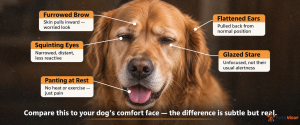
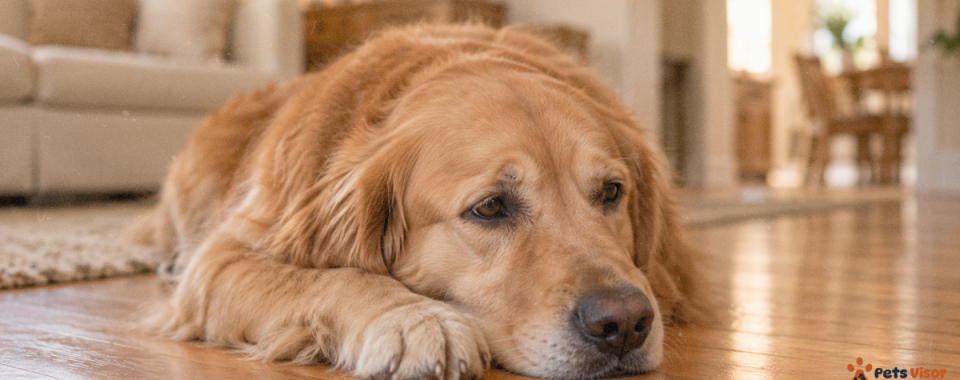
Facial expression is one of the most reliable early indicators of pain in dogs — but it’s also one of the most missed because owners don’t have a clear reference point for what their dog’s pain-free face looks like.
Here’s a practical technique: when your dog is genuinely, fully comfortable — sleeping on their side after a walk, blissfully chewing a toy — take a photo of their face. That’s your baseline. That’s their comfort face. Save it somewhere easy to access.
Now you have something to compare against when you’re worried. A dog in pain often shows:
- Tighter muscles around the eyes — a slight squinting or narrowing, even when they’re awake and alert
- A furrowed or drawn brow — the skin above the eyes pulls inward, creating a worried expression
- Glazed or distant eyes — less focused, less reactive, a quality often described as “not quite themselves”
- Flattened or pulled-back ears — particularly when not in a stressful social situation
- Panting at rest — mouth slightly open, rhythmic, without heat or exercise as a cause
The Colorado State University Canine Acute Pain Scale used by veterinarians specifically includes facial changes — droopy ears, arched eyebrows, and a worried expression — as core diagnostic criteria. These are the same things you can watch for at home.
Take Bear, a 5-year-old golden retriever I know well — his owner noticed his expression had become “more serious” over a few months. He wasn’t limping. He wasn’t crying. He just looked subtly different in the face. A vet visit confirmed early-stage arthritis in his hips. The face told the story months before the gait changed.
Here’s a video that explains these pain signals in real dogs — including what to watch for in the face:
Movement and Posture Changes That Signal Pain
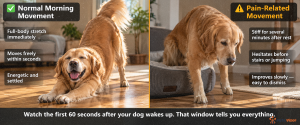
These are slightly more visible than the first category but still easy to rationalize away as “slowing down” or “just age.” They shouldn’t be.
5. Stiffness After Rest That Loosens Up
A dog who seems stiff and slow for the first few minutes after waking, then gradually moves more normally, is showing a classic arthritis or joint pain pattern. The improvement with movement is particularly deceptive — owners see the dog walking fine by mid-morning and assume everything is okay. The key window is those first few minutes of waking. Watch how long it takes your dog to move normally after getting up from a long rest.
6. Reluctance to Do Things They Used to Do Easily
Not jumping on the couch anymore. Slowing down on stairs. Stopping at the bottom of a step and waiting. Taking shorter walks or lagging behind. These changes are often gradual enough that owners attribute them to preference or aging rather than pain. A dog doesn’t decide they’re “not a jumper anymore.” When a dog stops doing something they used to do without hesitation, something changed. Pain is one of the most common reasons.
7. Changed Posture — Especially the Hunched Back or Prayer Position
A dog standing with a hunched or arched back is typically protecting the spine or abdomen. The prayer position — front end lowered to the ground, hindquarters elevated — is a classic abdominal pain posture: stretching the belly relieves internal pressure. Both are worth a same-day vet call if you see them.
After years of watching dogs do this, the hunched back is the one I most consistently see owners wait too long on. It looks mild. It doesn’t look urgent. But it often signals something that needs assessment promptly — spinal pain, kidney pain, or GI distress can all present this way.
Understanding how your dog’s sleeping position changes when they’re uncomfortable gives you another layer of observation — dogs in chronic pain often shift to positions that protect the painful area, which looks noticeably different from their usual resting posture.
Behavioral Shifts That Owners Dismiss as Mood or Personality
These are perhaps the most frequently missed signs your dog is in pain, because they don’t look like a physical problem at all.
8. New Irritability or Uncharacteristic Aggression
A dog who snaps when touched in a new area, growls at children they normally love, or becomes suddenly reactive with other dogs is potentially in pain. Pain lowers tolerance. Things that were fine before become overwhelming. This is a significant safety concern — research indicates dog bites are frequently linked to unrecognized chronic pain. If your dog’s temperament has shifted without obvious cause, pain should be on the differential before behavioral training begins.
9. Withdrawal and Loss of Interest
A dog who stops meeting you at the door, withdraws to a quiet room, shows less interest in toys they used to love, or seems generally flat and disengaged is showing signs of pain or illness. This one is particularly important because it’s so easy to attribute to emotional causes — “maybe they’re sad,” “maybe they’re bored.” That may be true. But withdrawal is also how dogs protect themselves when they hurt, removing themselves from interactions that might accidentally cause more pain.
10. Disrupted Sleep and Inability to Settle
A dog who gets up repeatedly during the night, can’t seem to find a comfortable position, switches surfaces frequently, or seems restless in a room that’s quiet and cool is likely managing discomfort. Chronic pain disrupts sleep in dogs the same way it does in humans. A dog who used to sleep soundly and now paces at 2am hasn’t developed insomnia — something is physically wrong.
If sleep disruption is a new behavior, watch how your dog stretches when they get up — stiff, reluctant stretching rather than the loose, full-body stretch of a comfortable dog is another quiet pain signal worth documenting.
What to Do When You Suspect Your Dog Is in Pain
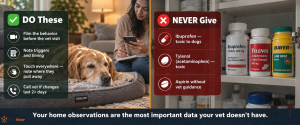
Don’t give human pain medications. Ibuprofen, acetaminophen, and aspirin are all toxic to dogs — even in small amounts. This is a genuine emergency if it happens accidentally, not a home remedy.
Do document what you’re seeing. Before your vet appointment, make notes or short videos of the specific behaviors that concern you: when they happen, how long they last, what triggers them. Dogs often mask pain more effectively in clinical settings due to the stress of the environment, so your home observations are critical data for your vet.
For dogs with confirmed joint or mobility pain, products designed for comfort at home can make a real difference in daily quality of life. The Big Barker 7″ Pillow Top Orthopedic Dog Bed is specifically designed to reduce pressure on joints during rest — one of the times dogs feel pain most acutely. The Zesty Paws Mobility Bites Dog Supplement (glucosamine and chondroitin formula) is another option worth discussing with your vet for ongoing joint support in dogs with confirmed arthritis.
The Cornell University College of Veterinary Medicine’s guide on recognizing pain in dogs is an excellent reference to share with family members who interact with your dog regularly — everyone in the household benefits from knowing what to watch for.
Frequently Asked Questions
How do I know if my dog is in pain or just tired?
Tiredness resolves with rest and returns to baseline. Pain doesn’t. A tired dog settles comfortably, sleeps soundly, and wakes refreshed. A dog in pain may struggle to settle, shift positions repeatedly, show stiffness after rest, or seem flat and disengaged even after sleeping. The key question is whether the behavior is new and whether it’s consistent — tiredness varies day to day; pain tends to show up in the same contexts repeatedly.
What does a dog in pain look like facially?
Dogs in pain often show tighter muscles around the eyes (a slight squinting), a furrowed or worried brow, flattened or pulled-back ears, glazed or distant eyes, and panting at rest without heat or exercise as a cause. These subtle facial shifts can be difficult to spot without a baseline — which is why taking a photo of your dog’s face when they’re fully relaxed is genuinely useful as a reference point for comparison.
Why do dogs hide pain from their owners?
It’s evolutionary, not intentional. Dogs descended from animals in pack environments where showing weakness signaled vulnerability to predators and rival animals. That instinct to conceal pain is still deeply wired, even in domesticated dogs who face no actual survival threat. Your dog isn’t hiding pain to protect your feelings or because they don’t trust you — they’re doing what their biology tells them to do, automatically.
Can behavioral changes alone indicate pain in dogs?
Yes — and this is one of the most important things for owners to understand. Withdrawal, new irritability, loss of interest in play, changes in sleep, and clinginess can all be pain signals even with no visible limp or obvious physical symptom. Research confirms that behavioral changes often appear before movement-related pain signs become obvious. If your dog’s personality or routine has shifted without a clear cause, pain should be on your list of possibilities before assuming it’s behavioral.
At what point should I take my dog to the vet for possible pain?
Any significant change from your dog’s normal — in movement, sleep, appetite, behavior, or mood — that persists for more than a day or two deserves a vet conversation. Don’t wait for limping or obvious distress. The subtle signs that appear earlier are the ones most worth catching early, because pain that’s caught and treated in early stages causes less suffering and is often easier to manage than pain that’s been running unchecked for months.
The signs your dog is in pain are often quiet, slow, and easy to rationalize as something else entirely. That’s not a failure of attention — it’s a failure of expectation. Most people expect pain to look like obvious distress. In dogs, it rarely does.
What you can do starting today: establish your dog’s baseline. Know what their comfortable face looks like. Notice their morning movement routine. Touch them regularly everywhere and note where they turn away. These observations, taken together over time, are your early warning system — and they’re irreplaceable. For more on reading your dog’s quiet physical signals, your dog’s sleeping position reveals a surprising amount about how comfortable they really are in their body.
Has your dog ever shown one of these quiet signs that turned out to be something worth treating? Drop it in the comments — your experience might help another owner catch something earlier.