
This post contains affiliate links. As an Amazon Associate, I earn from qualifying purchases.
📌 TL;DR
- Signs your dog trusts you show up in small everyday moments — not in dramatic gestures
- The belly-up position is the single strongest trust signal a dog can give, because it leaves them completely vulnerable
- Trust isn’t permanent — small daily actions either build it or slowly chip it away
- Each sign below comes with what to actually do when you spot it, because knowing isn’t enough
Your dog can’t say “I trust you.” But if you know where to look, they’ve been saying it a hundred different ways every single day.
The signs your dog trusts you aren’t grand performances. They’re quiet. Easy to walk past. A particular way they sleep. A specific thing they do with their eyes. The moment they choose to come to you instead of going somewhere else.
Here are the ten that matter most — and what each one is actually telling you.
Can Dogs Really Trust People?
Yes, and they’re wired for it. Dogs evolved alongside humans over thousands of years, and that process selected for animals who could form genuine emotional bonds with people. The capacity for trust isn’t something you teach a dog — it’s something you either earn or erode through your daily behavior.
Trust in a dog isn’t the same as obedience. A dog can follow commands perfectly and still not trust you. Trust is about whether your dog feels safe enough to be vulnerable around you — to sleep with their belly exposed, to look you in the eye without tensing, to choose your company when they have other options.
Research consistently shows that dogs who trust their owners have measurably lower cortisol levels. Their nervous system genuinely stands down when you’re around. That’s not metaphor. That’s biology.
And it works both ways. The American Kennel Club notes that building genuine trust requires consistency — your dog needs to be able to predict how you’ll behave before they can fully relax around you.
10 Signs Your Dog Trusts You Completely
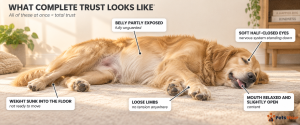
1. They Sleep on Their Back Near You
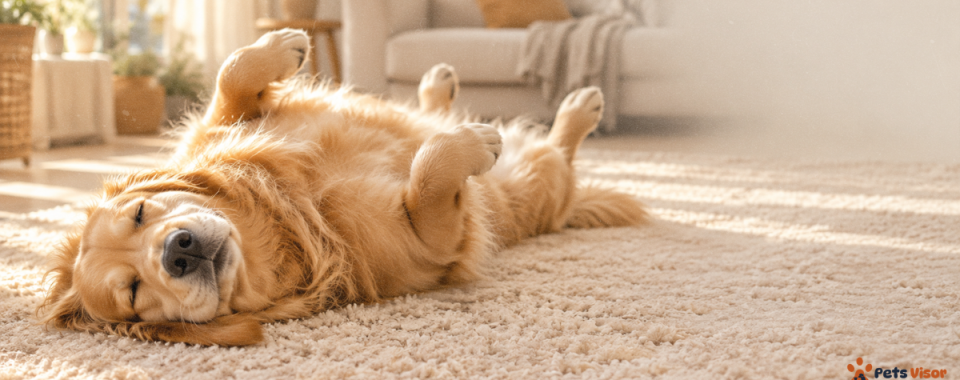
The belly-up position is the biggest one on this list. It looks casual — just a goofy dog lying around — but what it actually means is remarkable.
In any environment where there’s even a hint of danger, a dog won’t expose their belly. It’s where all their vital organs sit. To lie belly-up near you means their nervous system has fully registered that no threat exists. They’re not just comfortable. They’ve decided, at a physical level, that nothing bad is coming.
Some dogs never do this with strangers. Some rescue dogs take months before they’ll do it at all. When it appears, it’s real.
What to do: Don’t rush over and pet them when you notice it — that can actually interrupt the state. Just let it happen. The fact that you’re there while they’re in it is the whole point.
2. They Make Soft, Sustained Eye Contact With You
Eye contact in dog language is loaded. Direct, unblinking stare from a stranger is a threat signal. But soft, relaxed eye contact from your dog — the kind where their eyes are slightly squinted, blinking normally, no tension in the face — is something completely different.
That kind of eye contact triggers the release of oxytocin in both of you. The same bonding hormone that connects mothers to infants. It’s not incidental. It’s a loop: they look at you, you feel closer to them, they feel closer to you.
What to do: Look back. Blink slowly. Don’t stare intently — soft eyes, relaxed face. Two or three seconds is enough. Dogs whose owners respond to this kind of contact tend to offer it more.
3. They Lean Into You
A dog who leans their weight against you isn’t being pushy. They’re borrowing your stability. That physical contact is a request — not for food, not for anything in particular, just for the felt sense of your presence.
Dogs who feel uncertain or threatened don’t lean on people. They keep space around them, stay ready to move. Leaning into you means they’ve decided you’re solid ground.
What to do: Let them. Don’t shrug them off unless you genuinely need to move. If you do need to move, put a hand on them briefly first before stepping away — it closes the contact properly rather than cutting it off.
4. They Bring You Their Stuff
A dog bringing you a toy isn’t just showing off. Most dogs don’t share their prized possessions freely — with dogs they don’t know, with strangers, with people they’re uncertain about. The fact that your dog drops their best toy at your feet is a deliberate choice to share something they value with someone they value more.
Some dogs do this every time you come home. Others do it selectively, on certain days, with certain moods. Both count.
What to do: Acknowledge it every time. You don’t have to play — just take it for a second, say something, hand it back. The offer matters more than the game.
5. They Follow You From Room to Room
Not frantically. Not anxiously. Just quietly appearing wherever you are — a calm, steady presence that happens to share your orbit.
In canine social groups, closeness equates to safety. Staying near their trusted person is how dogs feel secure. When your dog follows you to the kitchen, waits outside the bathroom, drifts into whatever room you’ve settled in — they’re doing what feels right to their nervous system. You’re their safe base.
The distinction worth knowing is between this calm following and anxious shadowing. The calm version: they follow, settle somewhere nearby, relax. The anxious version: they follow, can’t settle, pace, look distressed. Trust looks like the first one.
What to do: Don’t make a big deal of it either way. Dogs who follow calmly don’t need encouragement. Just let them be in the same space as you — that’s all they’re asking for.
6. They Greet You Differently Than They Greet Everyone Else
You’ve probably noticed this without naming it. Visitors get a tail wag and maybe a sniff. You get the full production — ears back, whole body moving, sometimes a sound they don’t make for anyone else.
That difference is the trust in action. Your dog has categorized you separately from everyone else in their world. The reunion response reflects how much safety they associate with your return — because your absence created a measurable rise in stress hormones, and your return brings them back down.
What to do: Don’t ignore it. You don’t need to match their energy, but a calm acknowledgment — eye contact, a word, a hand on them — tells them the reunion landed. Dogs whose homecoming greetings get walked past eventually dial them back.
7. They Let You Touch Their Sensitive Spots
Most dogs will pull away when a stranger reaches for their paws. Many won’t let unfamiliar people touch their ears, their face, their tail base. These are vulnerable areas, and protecting them is instinct.
When your dog lets you handle their paws for nail trimming, touch their ears for cleaning, look in their mouth — without tensing or pulling away — they’ve made a decision that you’re safe enough to be that close to the parts they’d normally guard.
What to do: Handle these areas regularly, not just when you need something from them. Touch their paws during calm moments when there’s no trimming involved. It builds the association that your hands near those spots isn’t always a procedure — sometimes it’s just contact.
For nail maintenance specifically, Dremel 7300-PT Pet Nail Grooming Tool is what a lot of owners use once trust is established — the gradual grinding is less startling than a clipper snap. Building tolerance to it slowly over weeks is the key, not rushing to get the whole paw done at once.
8. They Turn Their Back To You

This one surprises people every time. A dog turning their back to you isn’t ignoring you. It’s the opposite.
An animal who doesn’t trust you keeps you in their visual field at all times. Turning their back means they’ve decided they don’t need to watch you — because they’ve already concluded you’re not a threat. It’s one of the quieter trust signals, and most owners completely miss it.
Take BEAR, a rescue Lab I watched go through a full transition from a guarded dog to a trusting one. For the first three months in his new home, he always positioned himself so he could see the door and his owner at the same time. The day he fell asleep with his back fully turned to her was the day she knew something had changed. He wasn’t doing it on purpose. He’d just stopped needing to watch.
What to do: Nothing. That’s the entire point. Your job is just to be there without doing anything that would give them a reason to turn back around.
9. They Stay Calm When You Leave
A dog who fully trusts you doesn’t panic when you go. They might watch you leave. They might even look a little flat for a moment. But they settle. They don’t pace, don’t bark continuously, don’t destroy things.
This is different from a dog who doesn’t care — a trusted attachment produces calm acceptance of separations because the dog has learned that you come back. A dog who panics is often one whose trust in the reunion isn’t yet solid enough to carry them through the gap.
What to do: Build this trust through consistent, low-drama departures and arrivals. Don’t make leaving into a long, emotional goodbye — it raises their arousal before you’ve even gone. Short, calm, predictable. If separation anxiety is a real issue, Adaptil Calm Home Diffuser plugged in near their resting area releases synthetic pheromones that mimic a nursing mother dog, and it genuinely helps some dogs settle. It’s not a substitute for behavioral work, but it makes the environment feel safer while that work happens.
10. They Yawn When You Do
After years of watching dogs, this is the one that still gets me every time. Dogs yawn contagiously with people they’re bonded to. Research has demonstrated this — the effect is stronger with owners than with strangers, and it’s not just a coincidence.
Contagious yawning in humans is associated with empathy. The same may be true in dogs. They’re not just copying you — they’re tuned into your state closely enough to catch it.
What to do: Yawn deliberately and watch. Don’t make it a test — just notice. If your dog yawns back within ten seconds or so, you’ve just observed something genuinely remarkable happening between two different species.
I covered a slightly different angle on this in a video — including the early trust signals that most owners miss in the first weeks with a new dog:
What Happens When Trust Erodes?
Trust doesn’t disappear overnight. It chips away, slowly, through patterns rather than single events.
A dog who used to greet you with a full-body wiggle and now just wags once and walks away — that’s information. A dog who used to sleep near you but has started choosing a different room — that’s information too. It doesn’t mean they hate you. It means something has shifted and it’s worth paying attention to.
The most common trust-erasers are inconsistency (rules that keep changing), physical approaches that feel threatening (moving too fast, looming), and punishing behaviors the dog couldn’t connect to a cause because too much time had passed. None of these feel like big deals in the moment. Over time, they accumulate.
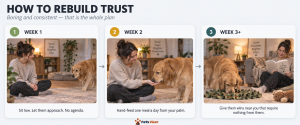
If you’ve noticed some of these signs fading, the repair protocol isn’t dramatic. It’s boring, actually. Hand-feed one small meal a day directly from your palm, without making them do anything to earn it. Sit on the floor where they can approach you but aren’t cornered. Let them initiate every interaction for a week. Boring and consistent. That’s what rebuilds it.
For dogs rebuilding trust after difficult experiences, PAW5 Wooly Snuffle Mat is useful — scatter their meals in it rather than a bowl. The sniffing work is genuinely calming, it gives them something positive to do near you without requiring any interaction, and it builds a new association between your presence and good things at their own pace.
A deeper look at the specific actions that quietly damage trust is in this post on things that hurt your dog’s feelings — it covers the ones most owners never notice they’re doing.
How Long Does It Take for a Dog to Trust You?
Honestly? It depends entirely on the dog’s history.
A puppy from a calm, well-socialized litter who’s been handled kindly from birth might extend baseline trust within days. A rescue dog who’s had difficult experiences might take three to six months before they show even the quieter signs. The 3-3-3 rule — three days to decompress, three weeks to settle, three months to feel at home — is a reasonable rough guide, but some dogs take longer and there’s nothing wrong with that.
The pace of trust-building isn’t something you can rush. What you can control is the consistency of your end of it. Show up the same way every day, and the trust builds at whatever rate the dog is capable of. Pushing it faster usually sets it back.
Also worth knowing: PetMD notes that dogs show trust differently based on personality and past experience — a shy rescue dog’s trust looks completely different from a confident puppy’s, but both are equally real.
Frequently Asked Questions
How do you know if a dog trusts you?
Look for a cluster of quiet physical signals rather than one big obvious behavior. A dog who sleeps belly-up near you, holds soft eye contact, follows you calmly from room to room, and lets you handle their paws without tensing is showing you trust through their body. The most reliable sign is how relaxed their body is when you’re nearby — a trusted person causes a genuine physical softening, not just a wagging tail.
How long does it take for a dog to trust you?
There’s no fixed timeline. A puppy with a calm background may extend trust within days. A rescue dog who’s experienced neglect or unpredictability may take three to six months or longer. The 3-3-3 rule is a useful rough guide — three days to decompress, three weeks to settle, three months to feel genuinely at home. Consistency matters far more than speed, and pushing a dog to trust faster than they’re ready for usually sets the process back.
Can you lose your dog’s trust?
Yes. Trust erodes through patterns rather than single events — inconsistent rules, approaches that feel threatening, repeated punishment for behaviors the dog couldn’t connect to a cause. One bad afternoon rarely does lasting damage. A repeated pattern does, because dogs form associations over time. The good news is that the same principle works in reverse: consistent, boring, predictable kindness rebuilds trust even after it’s been damaged.
What does it mean when a dog turns their back to you?
It means they trust you. A dog who doesn’t trust someone keeps them in their visual field at all times — they need to be able to see what you’re doing. Turning their back signals they’ve decided they don’t need to monitor you because they’ve already concluded you’re safe. It’s one of the quieter trust signals and most owners completely misread it as their dog being indifferent or ignoring them.
Do dogs trust their owners more than other people?
Usually, yes — and measurably so. Research has shown that dogs’ stress hormones drop significantly in the presence of their bonded person, an effect not replicated with strangers or even familiar non-owners. Dogs also show contagious yawning primarily with their bonded person, not with people they’ve just met. The distinction between a dog who trusts their owner and one who merely tolerates them is real, biological, and visible if you know what to look for.
What You’re Actually Looking At
The signs your dog trusts you are quiet things. A back turned. A belly shown. A yawn caught. A toy dropped at your feet for no reason other than because you were there.
None of them are performances. They’re just a dog doing what their body does when it feels safe. And the fact that their body does that around you specifically — that’s the whole answer.
Start noticing them tonight. Pick one from this list and watch for it. Once you see it, you’ll start seeing the others too, because they tend to travel together.
Which one surprised you most? Drop your dog’s name in the comments and tell me.